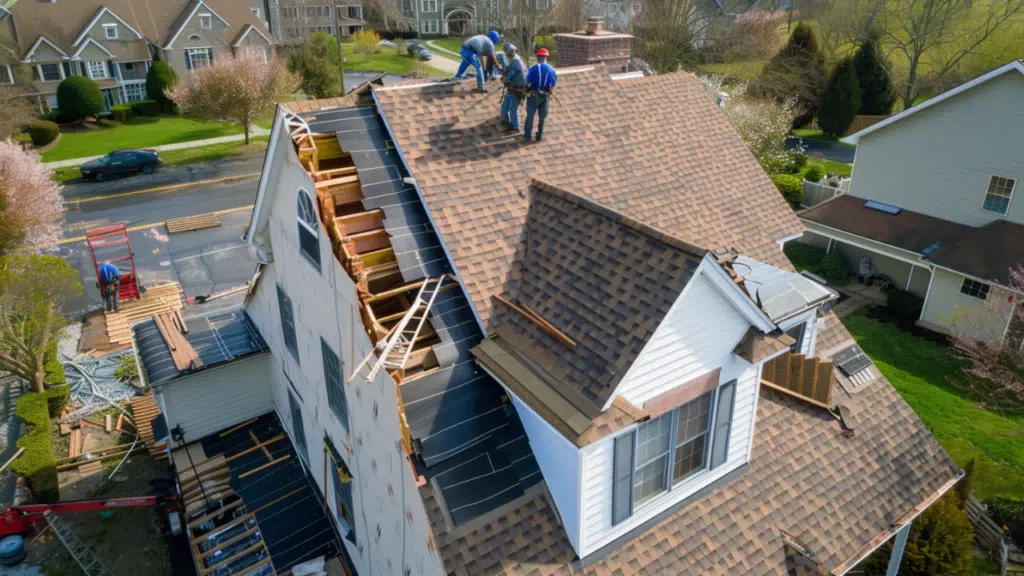
As a roofing expert with over 24 years of experience, I can tell you that ignoring a small leak could end up costing you $15,000 or more in repairs.
A roof repair fixes one isolated problem. A roof replacement is what makes sense when the roof is aging, failing in more than one area, or just not worth putting more money into. At that point, patching one spot usually does not solve the bigger issue.
Sometimes a small leak or a handful of damaged shingles really is a minor problem. Other times, that leak is just the first thing you notice. The roof may be worn out across the whole house, with trouble showing up in the shingles, flashing, ventilation, or the decking underneath. That is when I tell homeowners to stop thinking in terms of another patch and start looking at the cost and value of a new roof.
If water is already getting inside, the first step is to have us inspect it and give you the straight answer. We’ll show you whether you are dealing with one clear issue or a roof that is near the end of its life, then help you compare your options before you decide.
Key Takeaways
- Roof repair makes sense when the problem is limited.
- Roof replacement makes more sense when leaks, age, or damage are widespread.
- A leak is often a sign of more damage than you can see.
- Fast action helps limit interior damage.
- Repeated repairs can cost more than dealing with the full problem.
What is the difference between roof repair and roof replacement?
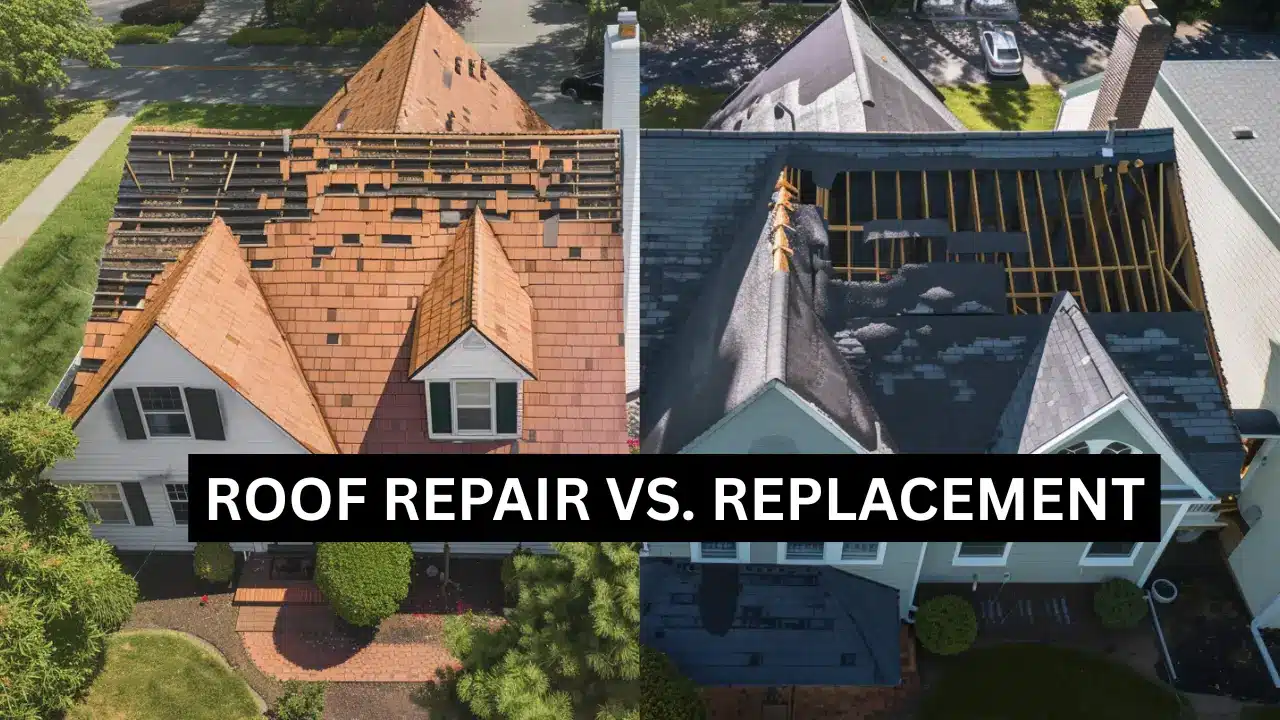
When I look at a roof, the difference usually comes down to scope. A repair deals with one part of the roof that failed. A replacement is what I recommend when a roof is worn out, breaking down in multiple areas, or no longer protecting your home the way it should.
That’s the simple version. The harder part is figuring out which situation you’re actually dealing with.
A roof leak, for example, does not always mean you need a full replacement. But it should never be brushed off either. As I explain in the video below, a lot of homeowners see a drip, put a bucket under it, and hope for the best, even though the damage may already be spreading into parts of the home they cannot see yet.
Embed YOUTUBE VIDEO – https://www.youtube.com/watch?v=ymIVPknM_A0
When does a roof repair make sense?
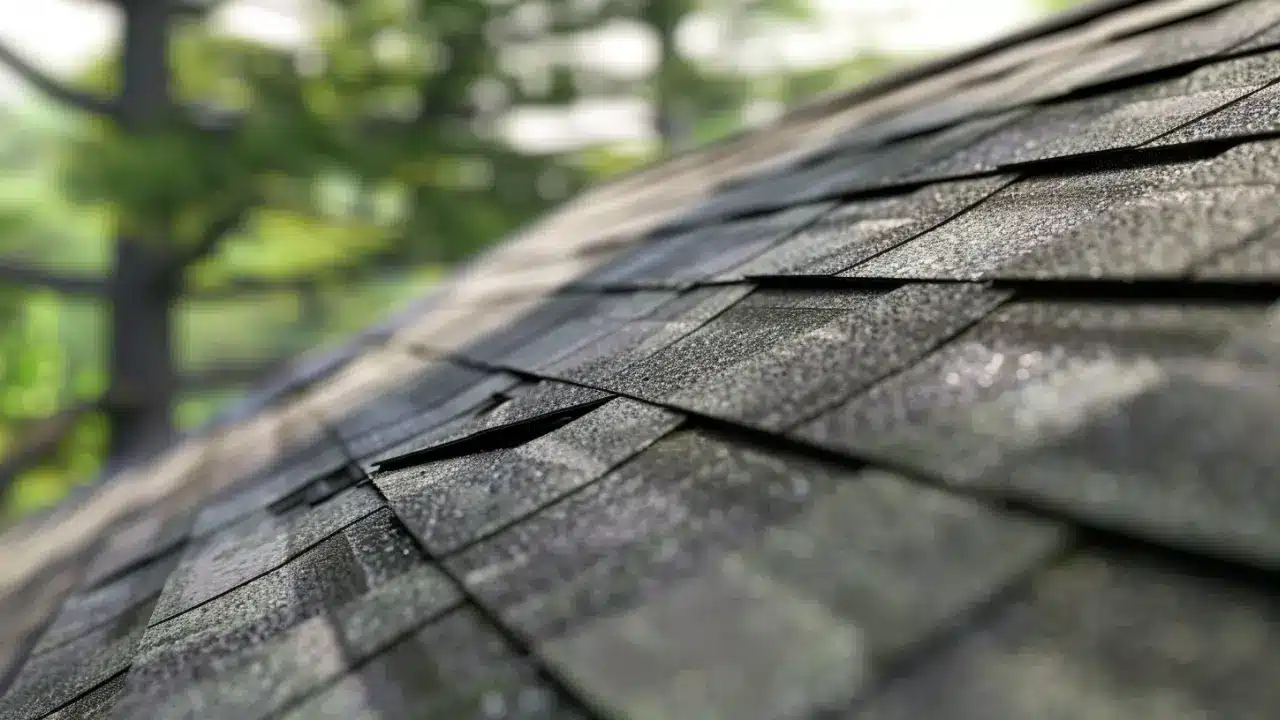
A roof repair can make sense when the problem is truly isolated, and the rest of the roof is still in good shape. If wind damaged one section, one flashing detail failed, or a leak can be traced back to one contained area, a repair may be the right move.
That’s really the best-case scenario. The roof still has life left, the issue is limited, and fixing that one spot can buy you real time before you need to think about a full roof replacement. Flashing problems are a good example. If the surrounding shingles are still solid and the rest of the roof is holding up well, correcting that detail may be all you need for now.
But I always look at the bigger picture. If that leak is part of a roof that’s wearing out overall, I’m going to tell you plainly when it makes more sense to stop patching and start planning for a new roof. InterNACHI explains that flashing is used in the parts of a roof most likely to leak, which is why problems around chimneys, vents, skylights, and roof-to-wall areas deserve a closer look.
That said, a repair only makes sense if it is actually solving the problem. If it is just covering over a roof that is already wearing out in several places, it is probably not saving you money. It is just delaying a bigger decision.
When does roof replacement make more sense?
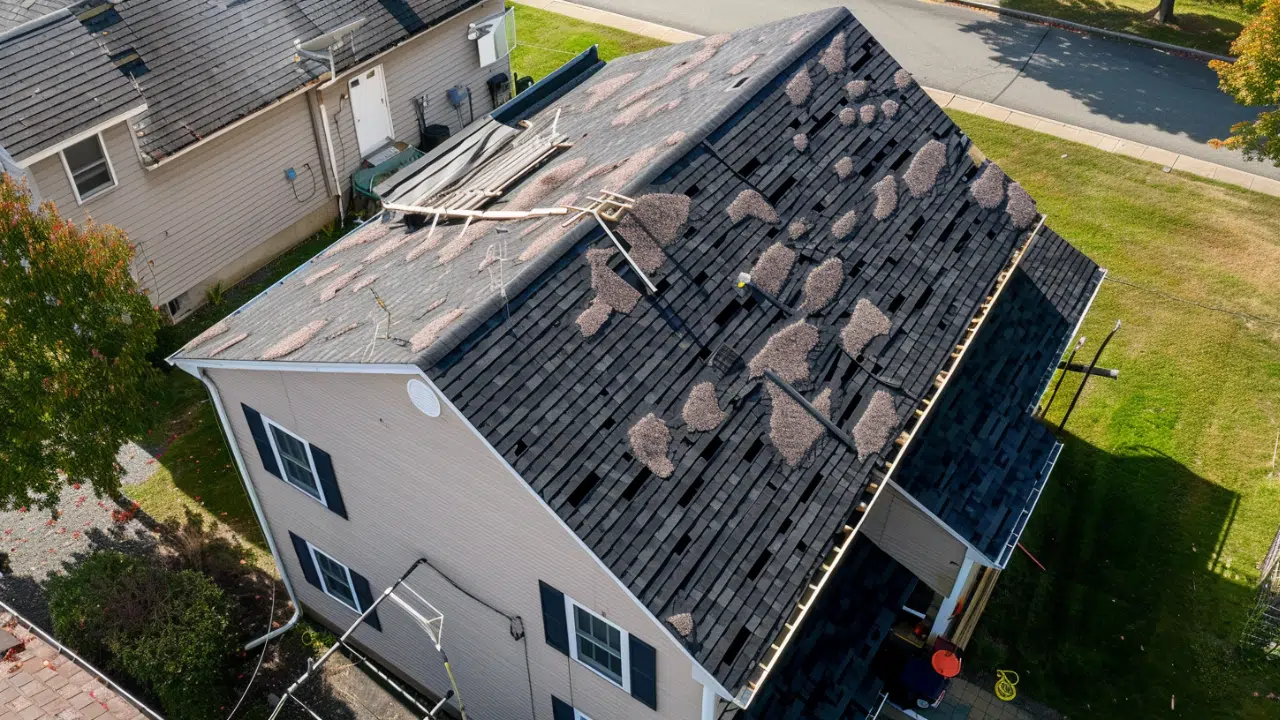
In my experience, a roof replacement usually makes more sense when the roof is older, the problems keep coming back, or the signs point to wear across the whole system instead of one small trouble spot. If you are dealing with repeat leaks, shingles wearing out in multiple areas, soft wood under the roof, or repairs that only seem to hold for a short time, replacement is often the better long-term decision.
That is really the point I make in the video above. A leak does not always mean you have one simple problem. A lot of the time, especially on an older roof, that leak is the warning sign that the roof is reaching the end of its life.
That is why I always tell homeowners to look beyond the one active symptom. If your roof is 20 years old and now you are seeing leaks, shingle wear, or signs of moisture getting in, it is worth stepping back and asking whether a new roof makes more sense than another temporary fix. A leak is not always just a leak. It is often your roof telling you it is running out of time.
What should you do first if your roof is leaking?
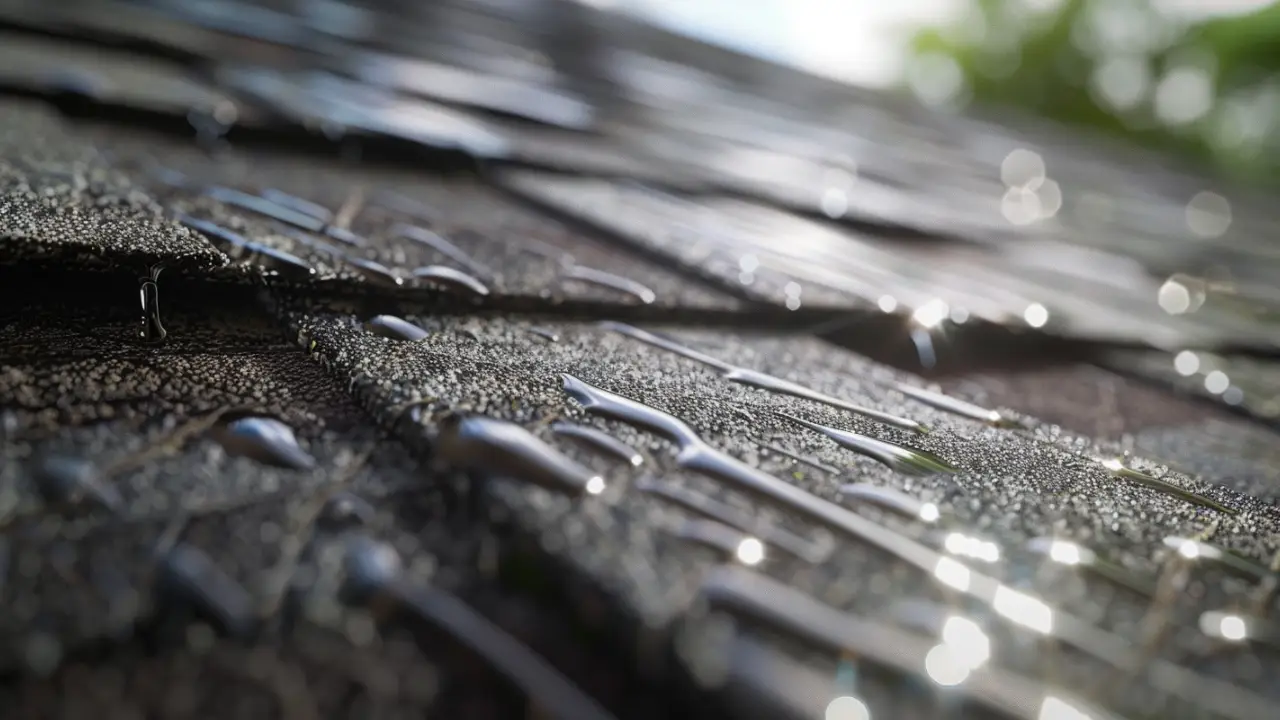
If your roof is leaking, the first thing I want you to do is keep people safe and stop the inside damage from getting worse. Don’t climb up on the roof during a storm. And if water is anywhere near a light fixture, outlet, or wiring, treat that like a real safety issue.
Start inside the house. Move furniture, electronics, rugs, and anything else that could be damaged. Put out buckets or whatever containers you have to catch the dripping water. Lay down towels to protect the floor and keep the area from getting slippery.
Then take a few photos and a quick video of the damage while it’s fresh. That helps with insurance, and it also helps us see what was going on when we inspect the roof.
Those steps are temporary, but they matter. They won’t fix the roof, but they can keep a small leak from turning into a much bigger mess. And if your roof is older or showing other signs of wear, a leak is often a sign that it’s time to look at replacement options instead of hoping a quick fix will solve it. Let me take a look and give you the straight answer.
Why is a roof leak often worse than it looks?
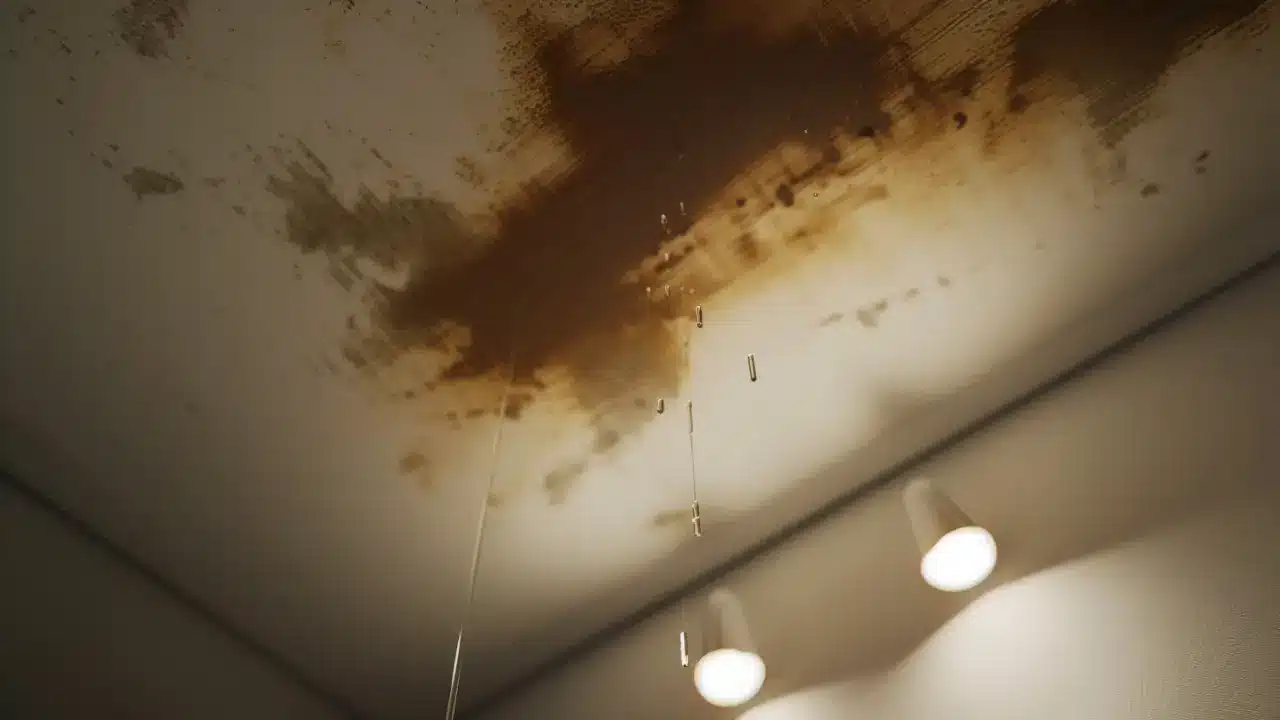
A roof leak is usually worse than it looks. If you’re seeing water drip from the ceiling, that’s often just the part you can see. By that point, water may have already worked its way through the roof decking, soaked the insulation, and started spreading into the ceiling or walls.
That’s why leaks can get expensive fast. Water does not always come straight down from one obvious spot. It travels. It can run along wood, spread through insulation, stain ceilings, and weaken materials before the true source is easy to find. What looks like a small watermark on the ceiling can actually point to a much bigger problem above it.
I’ve seen this a lot over the years. A homeowner notices one stain and thinks it is minor, but once we inspect the roof, we find aging shingles, soft decking, worn flashing, or signs that the roof is simply near the end of its life. That is why I tell people not to judge a leak by what they see inside. The stain may be small. The damage behind it may not be.
If your roof is leaking, the smartest next step is to get it inspected and find out whether you are dealing with an isolated issue or a roof that is ready to be replaced. I’d rather give you the straight answer now than see you spend money chasing the same problem over and over.
What kind of hidden damage can happen after a leak?
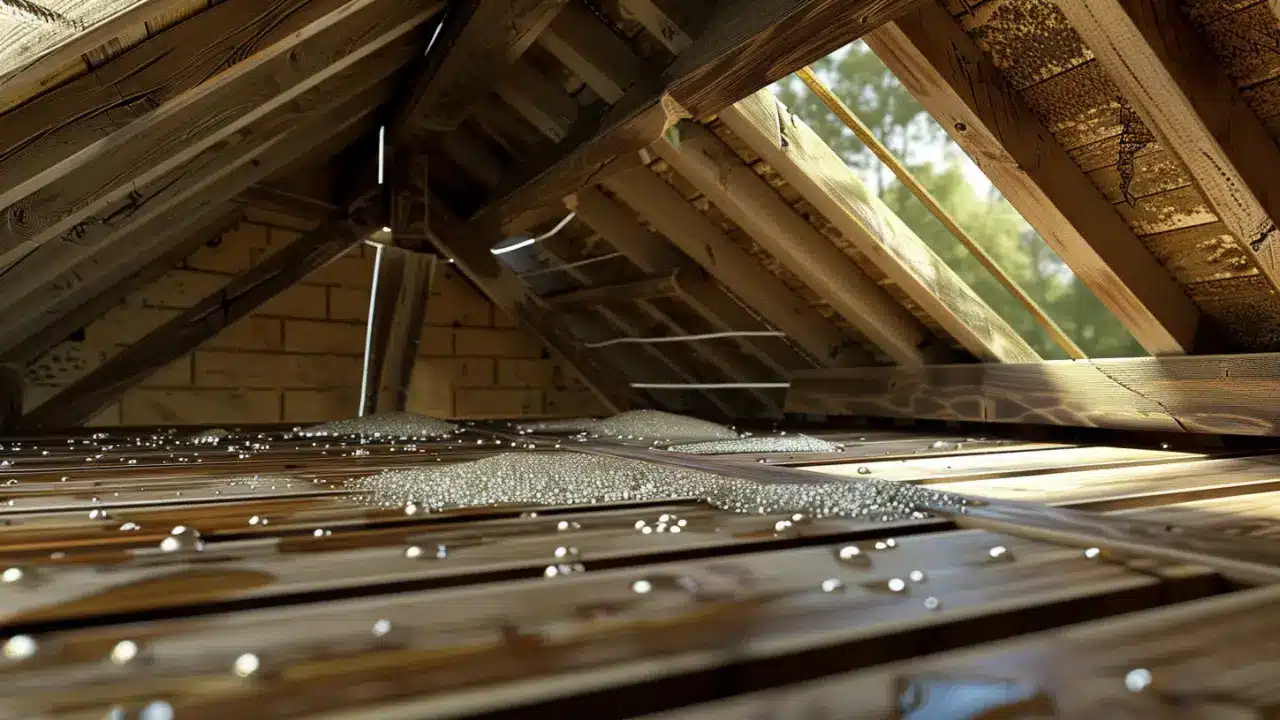
What most homeowners do not see is the damage hiding behind that one leak. Once water gets past the shingles and into the roof system, it can soak the decking, ruin insulation, and stain or weaken the ceiling below. And it usually spreads farther than you think. Water has a way of traveling, so the spot you see inside is often just one part of a bigger problem.
That is one reason I tell people not to let a leak sit. Mold can start growing within 24 to 48 hours after water exposure. At that point, you are not just dealing with a drip. You are dealing with what that moisture is doing inside your house.
The faster you act, the better your chance of limiting the damage and figuring out whether this is a repairable issue or a sign that it is time to start thinking about a roof replacement. The EPA’s mold guidance also warns that moisture problems should be addressed promptly because mold can grow in the wake of wet conditions.
Waiting around is risky. Even if the active dripping seems minor, the moisture may already be affecting materials you cannot see.
Can one leak be repaired, or does one leak mean you need a new roof?
One leak does not automatically mean you need a new roof. Sometimes it really is a small problem. I’ve seen leaks caused by one bad flashing area, a pipe boot that failed, or a small section of damaged shingles. In those cases, a repair may be enough for the time being.
The bigger question is why the leak happened in the first place and whether it’s truly limited to one spot. If your roof is older, the shingles are wearing out, or this leak is just the latest issue in a pattern, then it’s a different conversation. That’s when I stop looking at just the water stain on the ceiling and start looking at the roof as a whole.
That’s where experience matters. I look at your roof as a system. Shingles, flashing, underlayment, decking, and ventilation all have to work together. When several of those parts are starting to fail at the same time, a patch usually just buys you a little time. If the real issue is an aging roof, I’ll tell you that plainly so you can make the right call for your home.
What signs point toward replacement instead of repair?
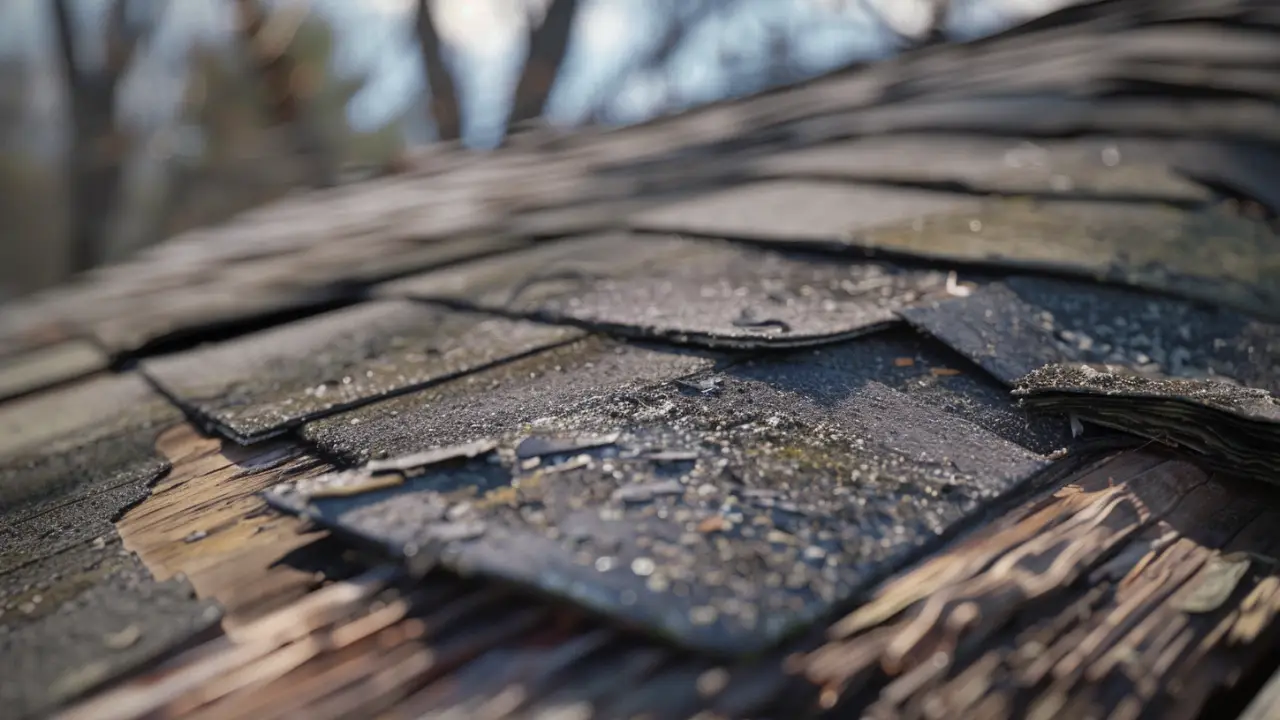
The clearest signs point toward replacement when the roof is older, failing in more than one area, or showing wear beyond a single isolated source.
The roof is over 20 years old.
Age alone does not settle the decision, but it matters. Once a roof gets older, leaks and visible wear are more likely to be part of a broader problem instead of a one-off repair.
You have more than one leak.
Multiple leaking points usually indicate the problem is no longer isolated. When water is entering from multiple areas, patchwork becomes harder to justify.
Shingles are curling, cracking, or missing.
Visible shingle failure is a strong sign that the roof is wearing out. Curling, cracking, or missing shingles can indicate the roof system is no longer holding up as it should.
Granules are showing up in the gutters.
Granule loss is another warning sign. When shingles shed granules, they lose the surface protection that helps them withstand the weather over time. GAF explains what shingle granule loss can mean, and it is one of the signs worth taking seriously when judging roof condition.
How should homeowners think about cost when comparing repair and replacement?
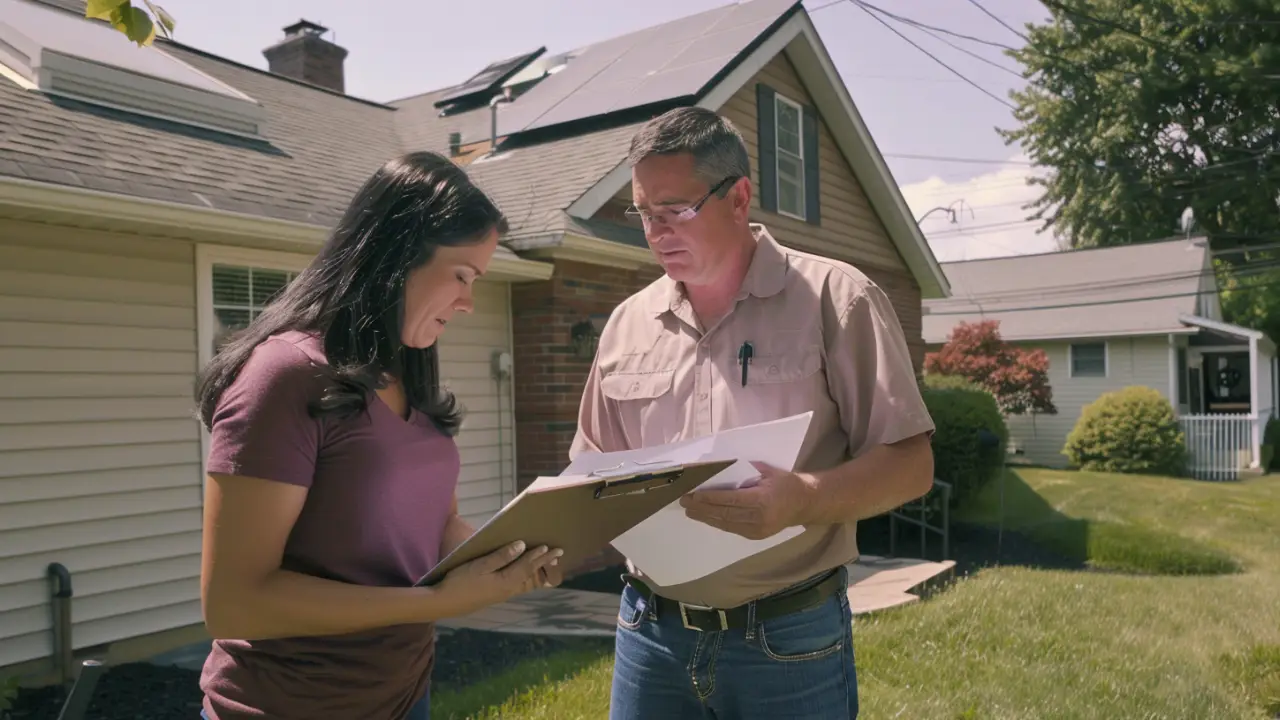
Homeowners should consider costs over time, not just costs today. A repair costs less up front, but that does not always make it the better financial move.
This is where repeated repairs can become a trap. The video shares an example of a homeowner who kept patching the same leak for 2 years, spent thousands on repairs, and still needed a full replacement.
If the roof is nearing the end of its life, money spent on temporary fixes may not really be buying much. It may just be delaying the replacement while the risk keeps growing.
What is a simple way to decide between repair and replacement?
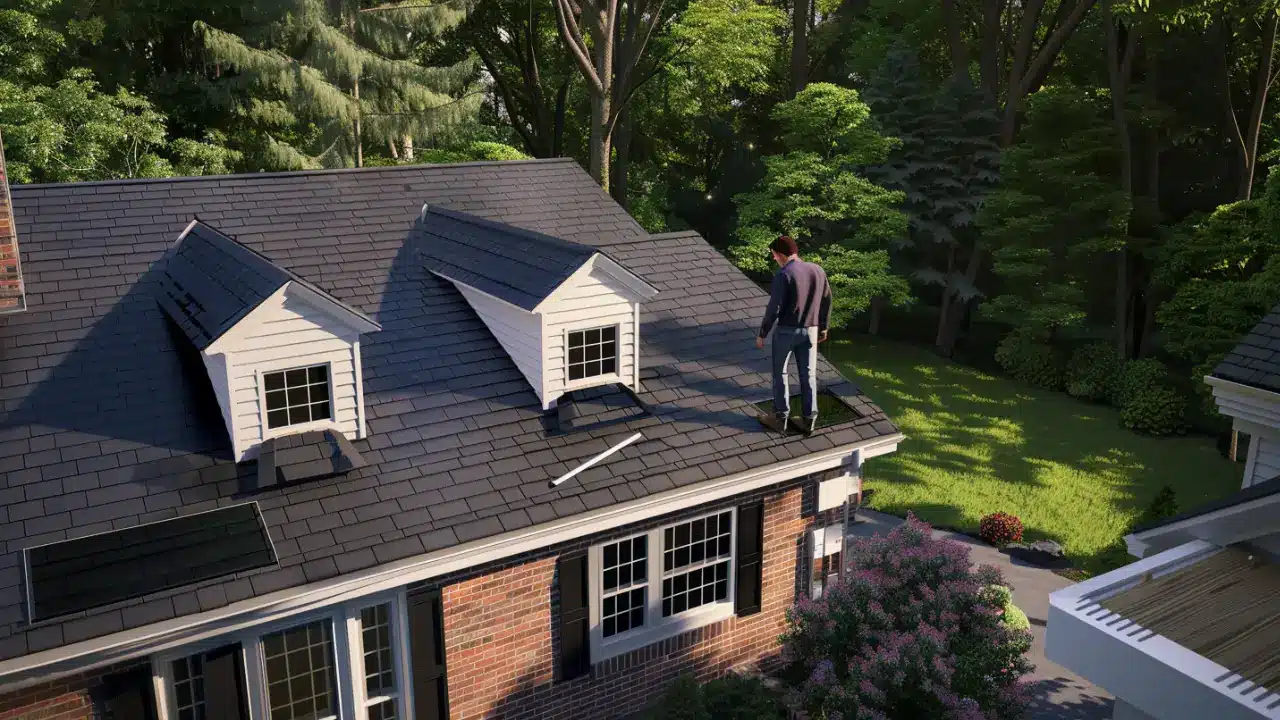
A simple way to decide is to ask a few direct questions. Is the problem in only one area? Is the rest of the roof still in good shape? Will the repair buy you real time, not just a temporary pause?
If the answer is yes across the board, repair may make sense. If the answer is no, or if the roof keeps asking for more money and more attention, replacement deserves a harder look.
Example / Template
| Situation | Repair Usually Makes Sense | Replacement Usually Makes More Sense |
| One small leak in one contained area | Yes, if the rest of the roof is sound | No, unless other issues are showing up too |
| Flashing issue around one vent or chimney | Yes | No, unless the roof is broadly worn |
| Leaks in different parts of the home | Rarely | Yes |
| Shingles are curling, cracking, or missing in several areas | Sometimes, as a short-term stopgap | Yes |
| Granules are collecting in gutters, and the roof is older | Usually not | Yes |
| Decking feels soft, or water damage is spreading inside | Usually not | Yes |
Summary: repairs fit limited problems. Replacement fits a roof that is wearing out, leaking in more than one place, or no longer worth patching.
FAQs
No. A roof leak does not always mean full replacement. It depends on the cause, the age of the roof, and whether the issue is limited or part of a wider pattern.
You can use a bucket to contain water, but you should not stop there. You still need to protect the area, document the damage, and have the roof checked before the problem spreads.
Water can travel through decking, insulation, and framing before it becomes visible inside the house. That is why the leak you see is not always directly below the place where water got in.
Water can travel through decking, insulation, and framing before it becomes visible inside the house. That is why the leak you see is not always directly below the place where water got in.
Checklist
- Protect the area inside the home first.
- Move valuables away from active dripping.
- Take photos and video of the damage.
- Look for signs that the problem is happening in more than one area.
- Pay attention to roof age and visible shingle wear.
- Do not keep patching a roof that is clearly wearing out.
Summary
When I look at a leaking roof, I’m not just thinking about how to stop the water today. I’m looking at the bigger picture. If it’s one isolated issue and the roof still has good years left, a repair may make sense. But if the roof is older, leaking in more than one spot, or showing clear signs of wear, a full roof replacement is usually the smarter long-term answer. At that point, patching one area often just delays the real fix and costs you more later.
If you want a clear read on whether your roof can still be repaired or it’s time to move toward replacement, contact us at Fortified Roofing, and we’ll help you determine the next step.