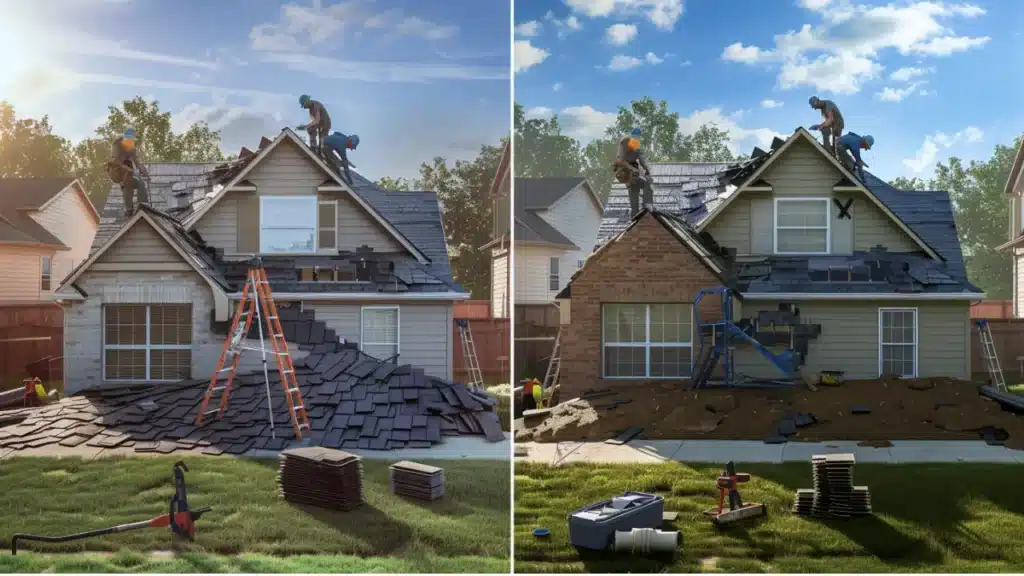
Roof repair makes sense when the problem is isolated. Roof replacement makes more sense when leaks keep coming back, damage is spread across the system, or the repair math starts getting too close to the cost of a new roof.
If I inspect a roof and the issue is truly limited, I will tell you to have someone repair it. If the roof is worn out and you are spending good money chasing one failure after another, I would rather help you make one smart replacement decision than keep patching a system that is already done.
Key Takeaways
- Roof repair works best when the damage is limited. If the problem is isolated, a targeted repair can stop the leak and let you move on.
- Roof replacement makes more sense when problems keep coming back.
- If you’re paying to fix the same area again and again, the roof is telling you it’s worn out.
- Roof age, decking, flashing, and moisture all affect the decision. I weigh those four pieces together, because one hidden issue can look better on paper than it really is.
- Compare future repair costs, not just today’s invoice. If the numbers keep stacking up, putting that money toward a new roof can be the smarter long-term move.
How do you decide between roof repair and roof replacement?
Start by looking at the whole roof system. The real decision comes down to five things working together. How isolated the problem is, how old the roof is, how often it has failed, whether water has reached the attic or decking, and how the repair math compares with the replacement math.
A ceiling stain is not the whole story. A missing shingle after a storm is one kind of issue, while an aging roof with repeated leaks, soft decking, bad flashing, and ventilation problems is a very different call.
When does roof repair make sense?
Roof repair makes sense when the damage is limited. Think one failed plumbing boot, one section of lifted shingles, a localized flashing issue, or damage from a branch that hit a single area.
That is usually the right call when the roof still has meaningful life left, the decking is sound, the attic is dry, and the source of the problem is clear. In that situation, a focused repair can buy you real time without wasting money.
One storm related problem is very different from a roof that seems to be wearing out in several places at once.
When does roof replacement make more sense?
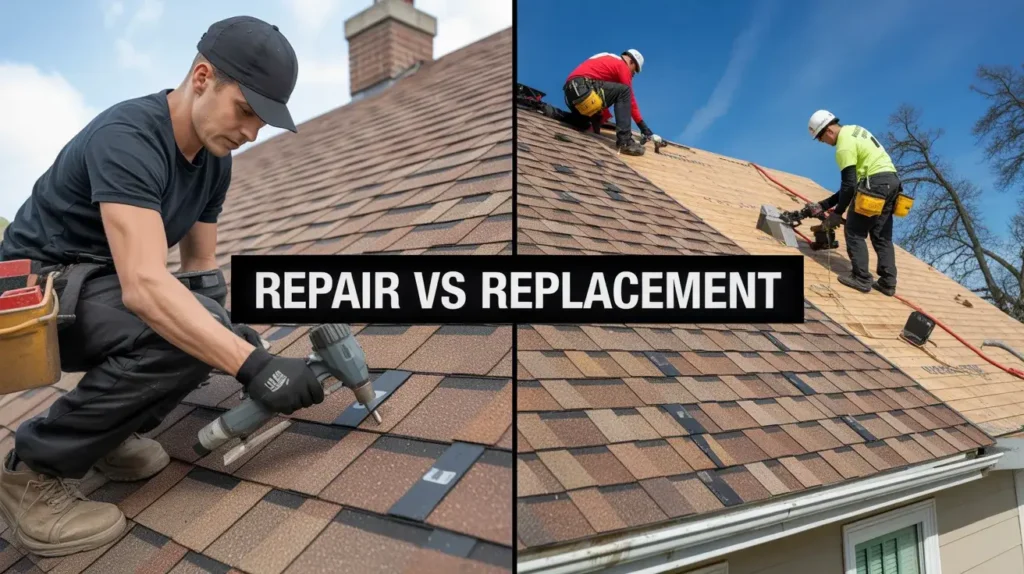
Roof replacement makes more sense when the roof is showing system wide wear. Repeated leaks, widespread shingle deterioration, soft decking, chronic flashing problems, poor ventilation, and visible age usually push the decision toward replacement.
This is where homeowners get stuck. They fix one area, then another area fails, and the spending starts buying delay more than it buys a durable solution.
According to the FHA appraisal standards, as explained by Bankrate’s FHA appraisal requirements guide, a roof should have at least two years of remaining physical life. That is not a consumer price guide, but it is a useful reality check when you are deciding whether another repair still makes practical sense.
What signs usually mean you need a new roof?
The most common signs are repeated leaks, widespread shingle curling or granule loss, sagging areas, soft spots, multiple failed flashings, and moisture problems that keep coming back. One sign by itself does not always mean replacement, but a pattern usually does.
Attic clues matter too. The Department of Energy notes in its durable attics fact sheet guide that roof leaks, poorly installed flashing around penetrations, and ice dams that push water under shingles are common ways moisture enters an attic.
Small leaks do not stay small for long. The EPA says water-damaged areas should be dried within 24 to 48 hours to help prevent mold growth, which is why delay can turn a roof issue into a bigger house issue.
If the roof is more than twenty years old and you are seeing several of those signs at once, it is usually smarter to compare full replacement options than to keep funding temporary relief.
How does the simple cost calculator work?
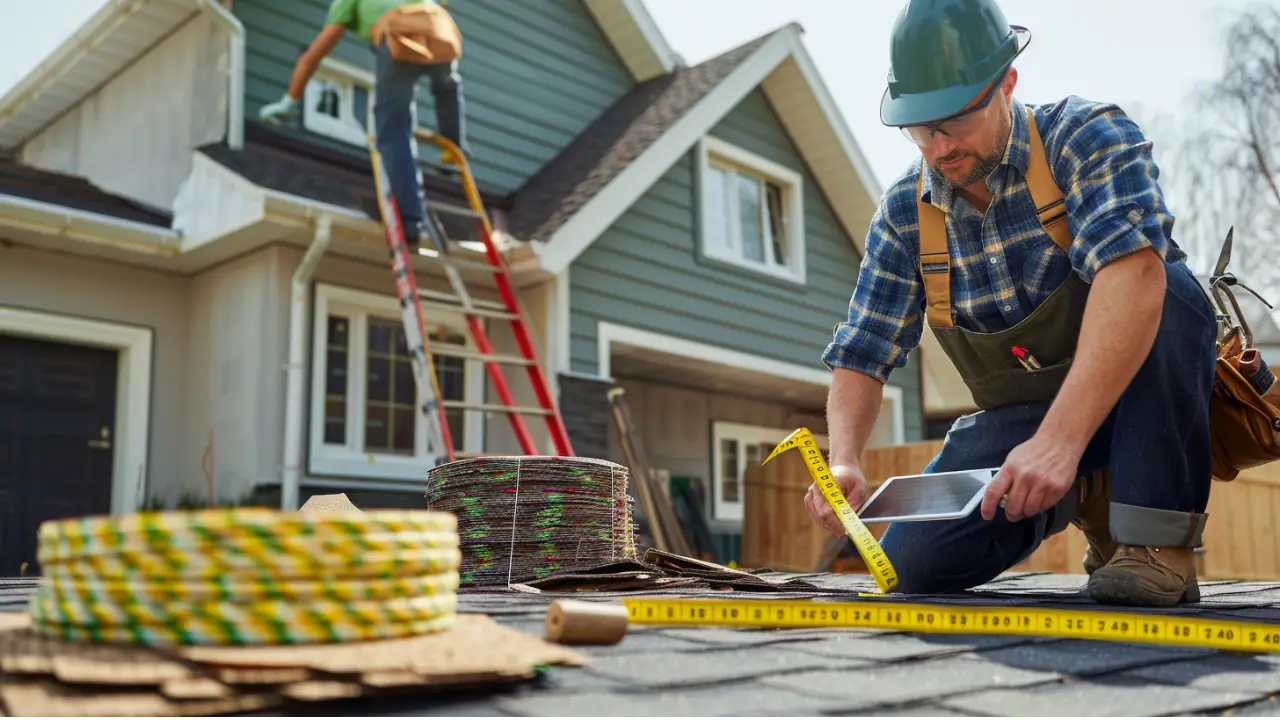
The simple cost calculator compares the three-year repair path with the full replacement path. Comparing only today’s repair invoice with a replacement estimate usually hides the real cost of an aging roof.
Use this framework:
- Start with today’s repair quote.
- Add the likely follow-up repairs over the next three years.
- Add interior repair risk, such as drywall, insulation, paint, or trim damage if leaks continue.
- Compare that total with a full roof replacement estimate.
- Then weigh the numbers against the roof’s age and overall condition.
A practical rule helps here. If the three-year repair path stays low and the roof is otherwise sound, repair can still be a smart move.
The decision changes when the numbers climb. If the three-year repair path gets close to 35 percent to 40 percent of replacement on an older roof, replacement usually becomes the better long-term value.
What does a repair vs replacement example look like?
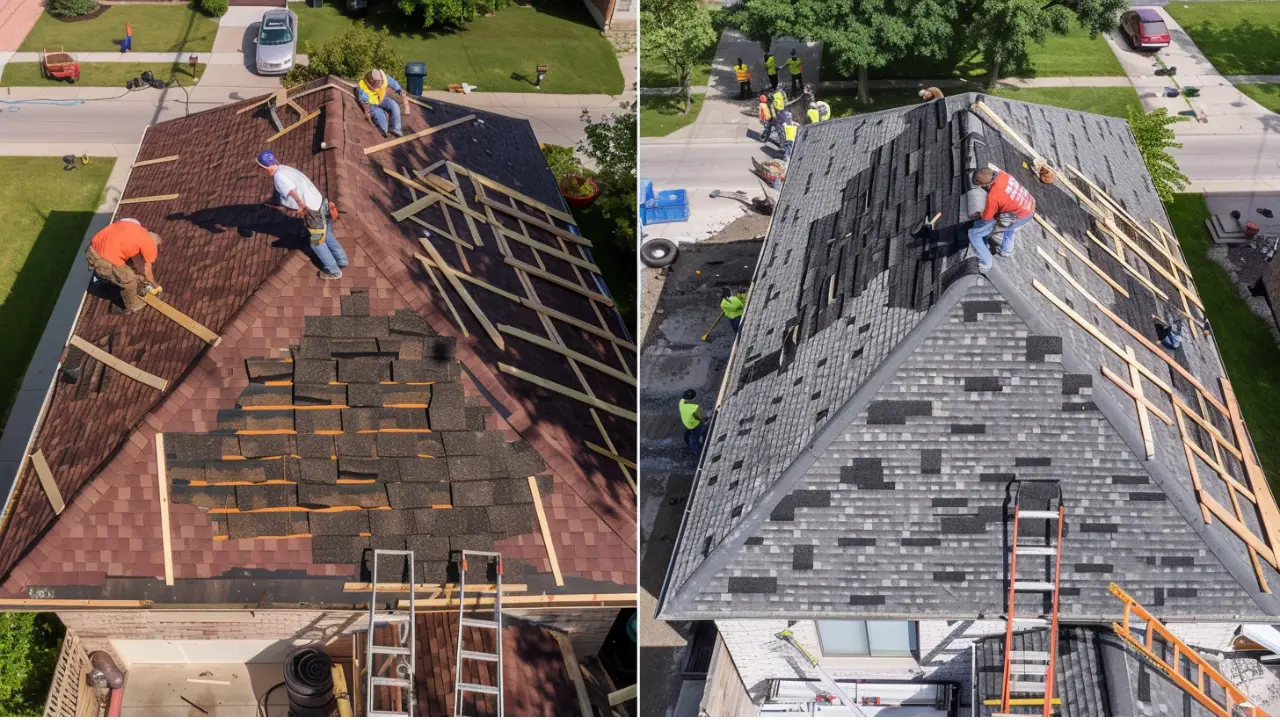
Picture a twelve year-old roof that needs a $1,200 flashing repair and has no broader wear issues. That case usually leans toward repair because the problem is limited and the roof still has real service life left.
Now picture a twenty-two-year-old roof that needs a $3,800 leak repair today, likely needs more work in two other areas soon, and already shows widespread wear. That case usually leans toward replacement because the next repair is rarely the last one.
Those are example numbers only. Actual pricing will change based on roof size, pitch, access, materials, flashing complexity, ventilation upgrades, and whether damaged decking is found after the tear-off.
What questions should you ask before deciding?
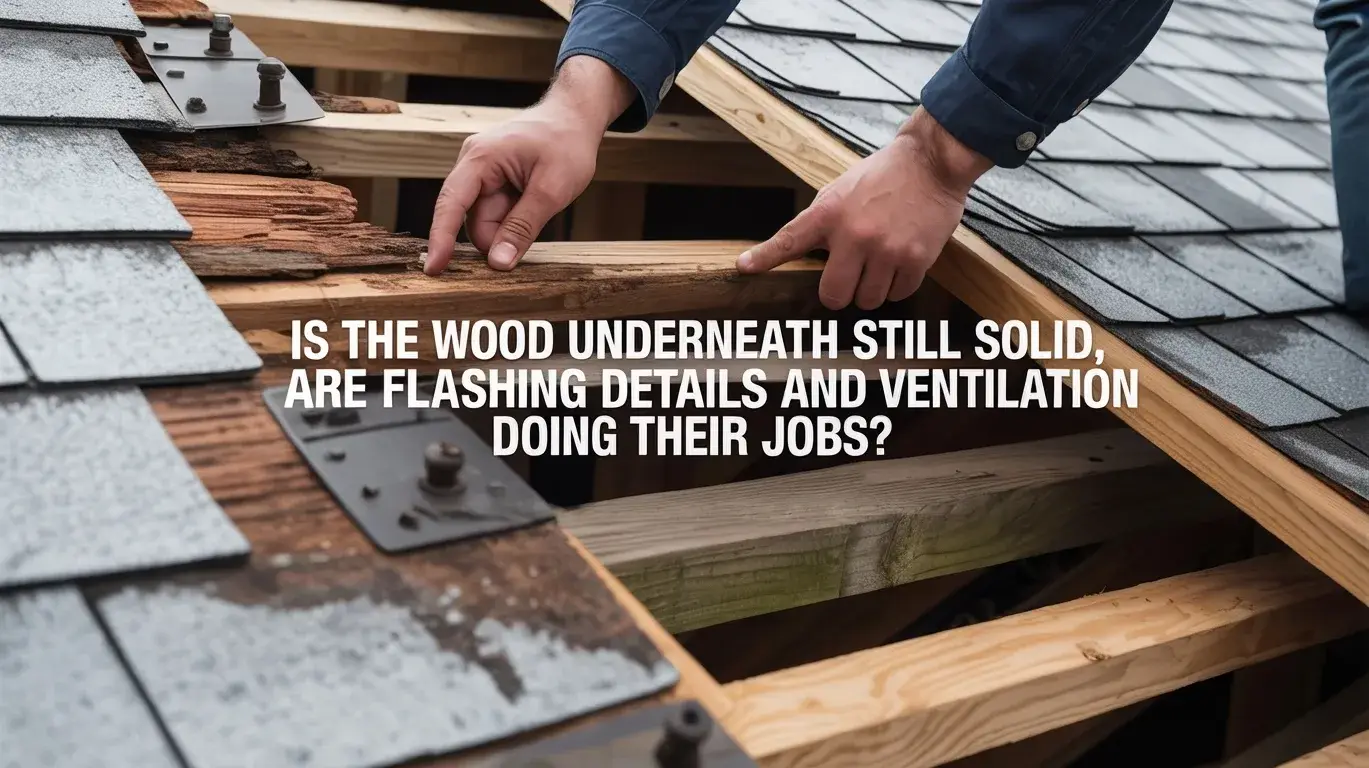
Ask basic questions first. Is the damage isolated or repeated, or is the roof near the end of its useful life? Is the wood underneath still solid, and are flashing details and ventilation doing their jobs?
Then ask the money questions. Are you trying to buy time for one year, or are you trying to solve the problem for good?
Those questions keep the decision grounded. They also keep you from spending replacement level money on a roof that is still being treated like a repair candidate.
FAQs
Only if the leak is truly isolated. If the roof is already failing in multiple areas, that approach usually spreads the pain out without reducing the total cost or the total stress.
Sometimes, but only in the right case. A targeted fix can help when the rest of the roof is still fundamentally sound, but it does not reset the age or condition of shingles, flashing, decking, and ventilation across the entire system.
Sometimes yes. If the existing roof is likely to become a negotiation problem, inspection problem, or active leak risk, replacement often protects your asking price better.
Sometimes no. If the issue is isolated and the roof still presents well, repair may be enough for the sale.
Insurance can affect the dollars. It does not change the roof’s actual condition, so the smarter decision still depends on whether the damage is isolated or whether the system is failing more broadly.
Checklist
- Confirm whether the problem is isolated or systemic.
- Compare the three-year repair path with replacement, not just today’s invoice.
- Look for attic stains, soft spots, and repeated leaks.
- Check flashing, decking, and ventilation, not just shingles.
- Be cautious when repairs approach one third of the replacement cost on an aging roof.
Summary
Roof repair vs roof replacement comes down to one question: are you solving one clear problem, or are you trying to keep an aging roof on life support? If the issue is isolated, repair can be the smart move. If the roof is worn out, leaking repeatedly, or getting expensive to chase, replacement is usually the better long-term call.
Protect Your Home With Trusted Roofing Experts in New Jersey
If you’re unsure about your roof’s condition, don’t wait for minor issues to turn into major damage. Fortified Roofing provides professional roof inspections, roof replacements, repairs, and solar roofing solutions throughout New Jersey. Whether your roof has storm damage, aging shingles, leaks, or you simply want peace of mind, our experienced team is here to help.
Led by roofing expert John Kabourakis, Fortified Roofing is committed to delivering honest recommendations, quality craftsmanship, and long-lasting roofing systems designed to protect your home and investment.
Call us today at (215) 260-8111 or contact our team online to schedule your inspection or request a free estimate.