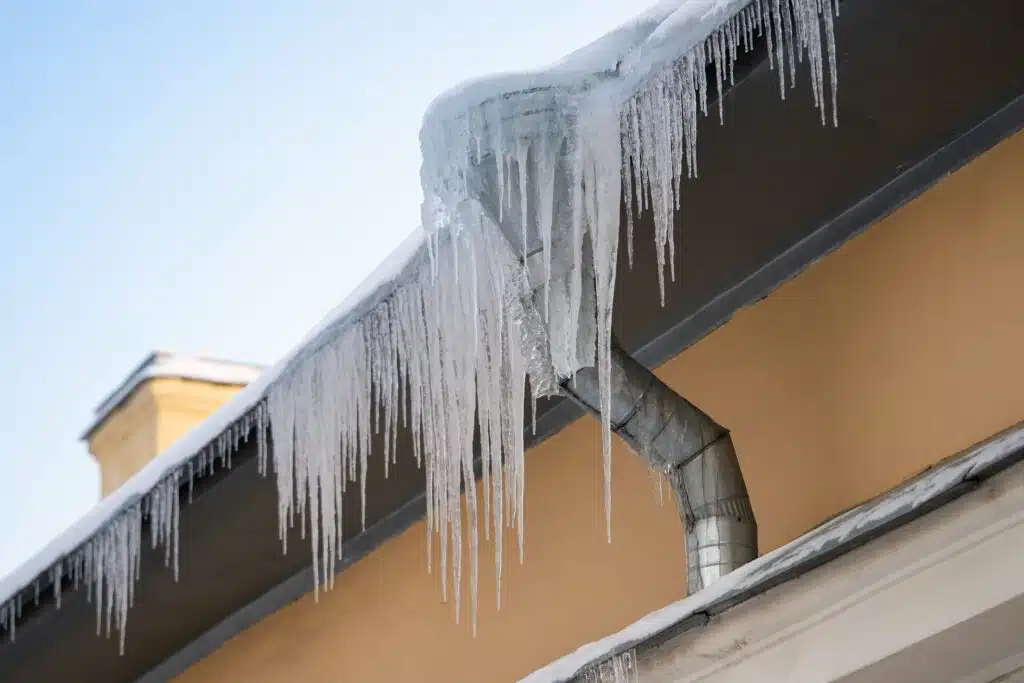
Ice dams are one of the most common problems for residential roofing across PA during winter. They can lead to roof leaks, interior water damage, mold, and pricy roof repair.
That’s why Fortified Roofing created this blog; we’ll explain what ice dams are and how you can prevent them and protect your home from winter roof damage.
What Is an Ice Dam?
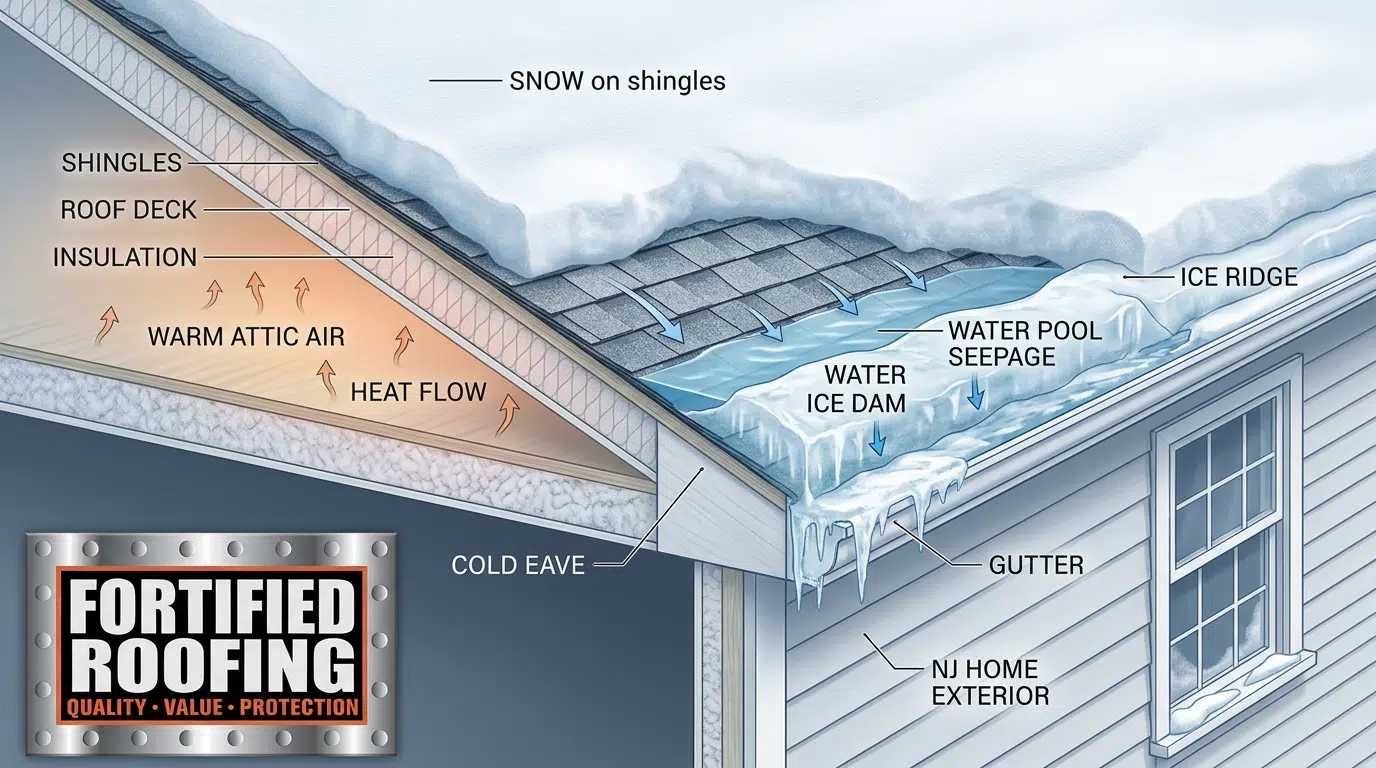
An ice dam forms when snow on your roof melts and refreezes at the eaves. This creates a ridge of ice that prevents proper drainage. As melted snow backs up behind this ridge, water can seep under shingles and into your home.
Ice dams are especially common on homes with weak attic insulation, inadequate roof ventilation and older roofing systems.
How to Prevent Ice Dams on Your Roof
It’s all about focusing on temperature control and water flow.
1. Improve Attic Insulation
Insulation keeps warm air inside your home, preventing snow from melting unevenly on your roof.
2. Ensure Proper Roof Ventilation
Ventilation allows cold air to circulate through your attic, keeping the roof surface uniformly cold.
| Ventilation Type | Purpose |
| Ridge vents | Release warm air from the attic |
| Soffit vents | Draw cold air into the attic |
| Gable vents | Improve cross-ventilation |
3. Install Ice + Water Shield
An ice and water shield is a waterproof underlayment installed beneath roofing shingles. It provides a nice second layer of protection!
4. Keep Gutters Clear
Clogged gutters trap water, which freezes and worsens ice dam formation. Before winter …
- Remove leaves and debris
- Check downspouts for blockages
- Repair sagging or damaged gutters
Clean gutters help melted snow drain safely away from your roof.
DIY Ice Dam Removal – Don’t Risk It!
Many homeowners try to chip away ice dams themselves, but this can cause more harm than good.
Common DIY risks include damaging shingles or flashing, creating roof leaks, and personal injury from falls or tools, whereas expert roofers use safe, non-destructive methods to tackle ice dams.
Protect Your Home With Trusted Roofing Experts in New Jersey
If you’re unsure about your roof’s condition, don’t wait for minor issues to turn into major damage. Fortified Roofing provides professional roof inspections, roof replacements, repairs, and solar roofing solutions throughout New Jersey. Whether your roof has storm damage, aging shingles, leaks, or you simply want peace of mind, our experienced team is here to help.
Led by roofing expert John Kabourakis, Fortified Roofing is committed to delivering honest recommendations, quality craftsmanship, and long-lasting roofing systems designed to protect your home and investment.
Call us today at (215) 260-8111 or contact our team online to schedule your inspection or request a free estimate.
Our Roofing & Exterior Services
- Roof Replacement
- Roof Repair
- Storm Damage Roof Repair
- Roof Inspections
- Solar Roofing Solutions
- Siding Installation & Repair
- Gutter Services
Frequently Asked Questions About Ice Dam Prevention
What causes ice dams to form on roofs?
Ice dams form when heat escapes through the attic and melts snow on the roof. The melted snow refreezes near the colder roof edges, creating a ridge of ice that prevents proper drainage and traps water behind it.
Can ice dams damage my roof and home?
Yes. Ice dams can force water underneath shingles, leading to roof leaks, damaged insulation, stained ceilings, mold growth, and even structural damage if left untreated.
How can homeowners prevent ice dams during winter?
Proper attic insulation, balanced roof ventilation, sealing attic air leaks, and keeping gutters clean can help prevent ice dams from forming and reduce the risk of winter roof damage.
Should I remove ice dams myself?
DIY ice dam removal can be dangerous and may damage roofing materials. It’s best to contact a professional roofing contractor who can safely remove ice dams without harming your roof.
When should I schedule a winter roof inspection?
Homeowners should schedule a professional roof inspection before winter begins or immediately after major snowstorms to identify potential roofing issues, insulation problems, or ventilation concerns before they worsen.